Sheet heating system and screed replacement tiles from Leipfinger-Bader as a system solution for timber construction
Economical, environmentally friendly, and gentle on wood: Sheet heating system and screed tiles from Leipfinger-Bader open up new possibilities in modern timber construction as a system solution.
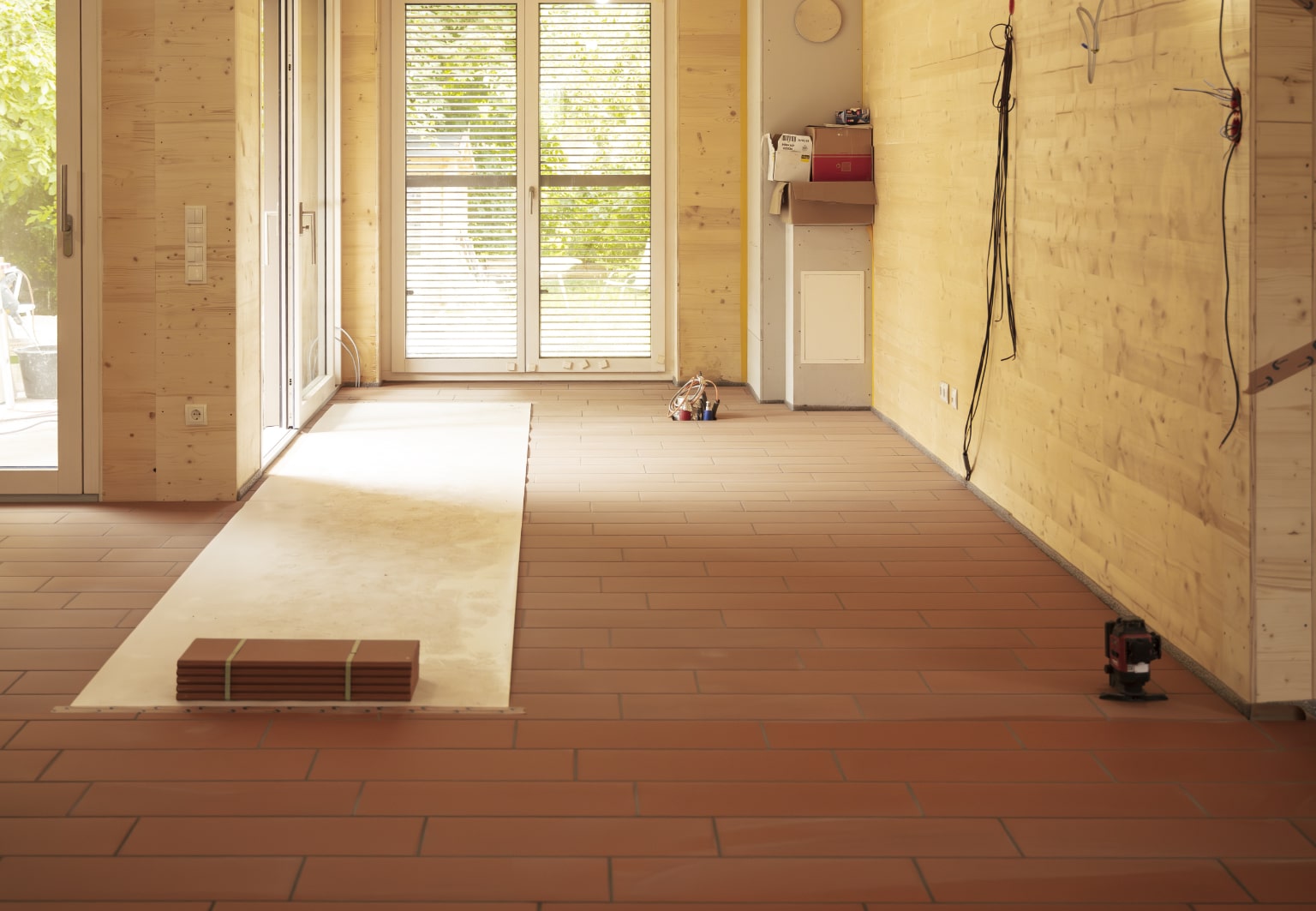
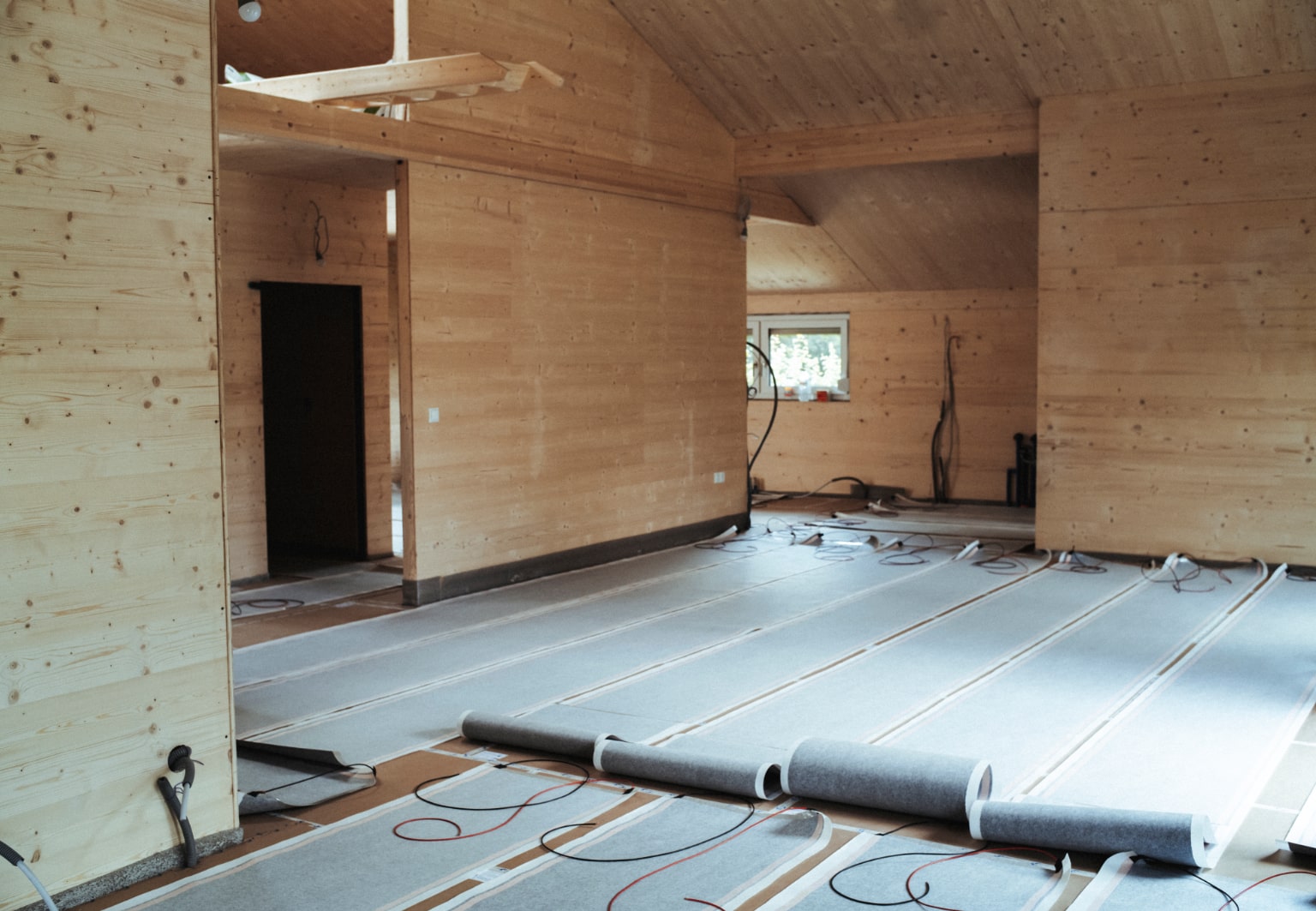
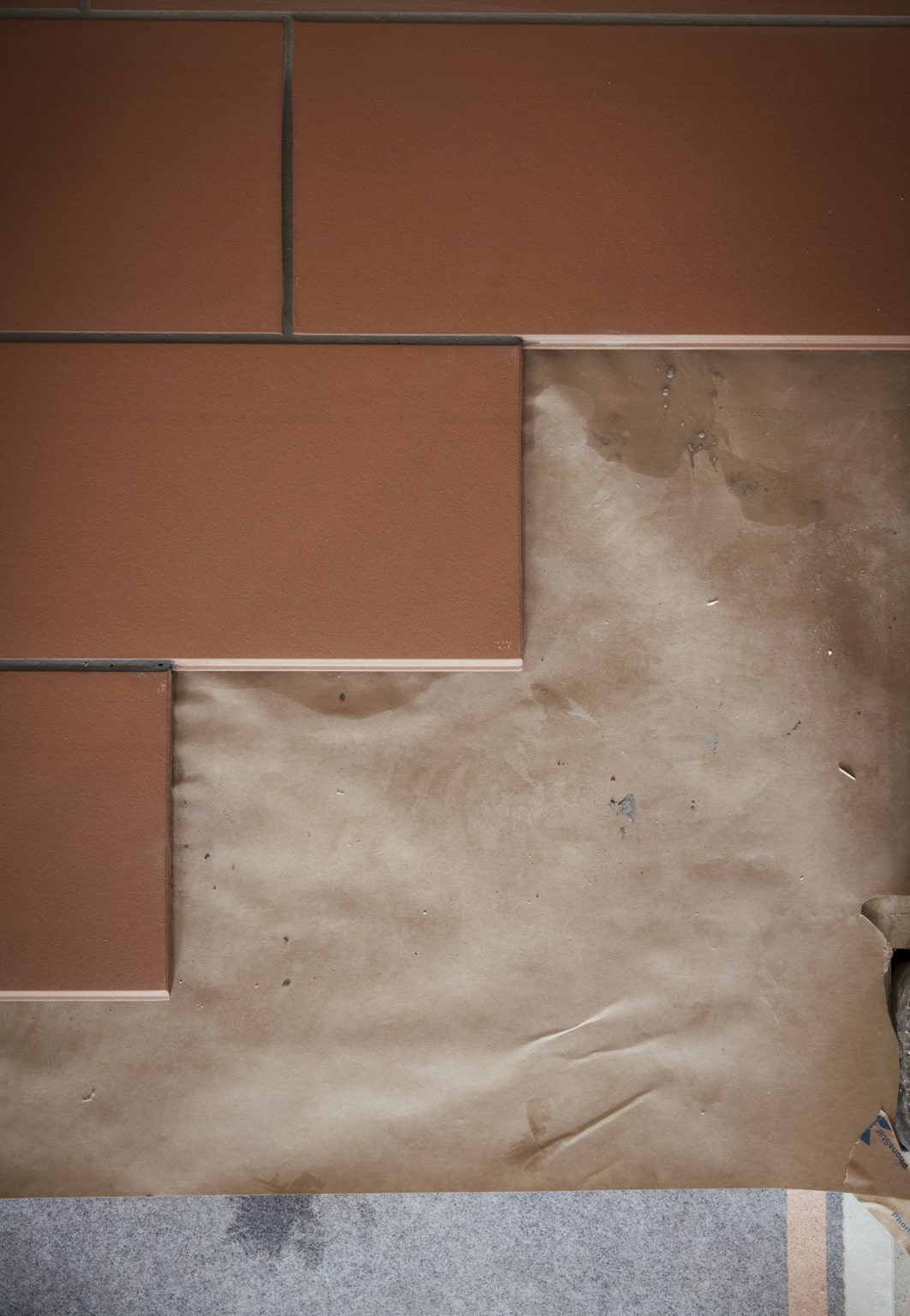
Economical, ecological, and gentle on wood: Sheet heating system and screed tiles from Leipfinger-Bader open up new possibilities in modern timber construction as a system solution. The Sheet heating system is an electric surface heating system that is supplemented by ceramic screed tiles. The latter has high thermal conductivity and a fast response time, so that heat transferred from the heating system to the tiles is quickly absorbed and released into the room. Because the screed tiles are also laid dry, unlike conventional screed, no moisture enters the building – a factor that plays an important role, especially in timber construction.
Wooden buildings are in vogue – both in the single-family home sector and in multi-story residential construction. This is because wood has a positive effect on the building's carbon footprint, can be installed quickly and easily thanks to the ever-increasing degree of prefabrication, and is considered a natural, healthy building material. Those responsible for construction are increasingly implementing the approach of ecological and sustainable building inside the building as well: Fossil fuels are being phased out, and builders and investors are placing importance on using building materials to which the principle of circular economy can be applied.
Prädestiniert für den Holzbau
Diesen Anspruch greift Leipfinger-Bader mit seinen Systemlösungen auf und bietet mit der Kombination aus Heizpapier und Estrichziegel eine moderne wie ökologische und substanzschützende Lösung für den Holzbau. Denn der Estrichziegel besteht aus dem Naturmaterial Ton und wird bei 1.200 Grad Celsius gebrannt. Der keramische Trockenestrich überzeugt dabei insbesondere mit seiner hohen Druck- und Biegefestigkeit und dient als feuchtigkeitsunempfindliche Lastverteilschicht, die sich zudem durch ihre geringe Aufbauhöhe von nur 18 Millimetern auszeichnet. Während die naturrote Variante des Estrichziegels in den meisten Fällen mit einem Sichtbelag wie Fliesen oder Parkett belegt wird, besteht auch die Option, den bloßen Estrichziegel, also die „Rohvariante“, als Sichtbelag beizubehalten. Ausschlaggebend für diese Entscheidung ist oftmals die attraktive farbliche Kombination aus Sichtholz und Ziegelrot. Alternativ können Bauherren sich auch für Estrichziegel entscheiden, die Lastverteilschicht und keramische Fliese mit Designoberfläche in einem Bauteil verbinden. „Die verschiedenen bauphysikalischen Vorteile des Estrichziegels – wie hohe Werte für Punkt- und Verkehrslasten, Wasserfestigkeit, lange Haltbarkeit und der hohe Schamotteanteil – überzeugen immer mehr Bauherren davon, von klassischem Fließestrich abzuweichen und neue Wege zu gehen“, erklärt Josef Seestaller, Experte für Bodensysteme und Lehmbausysteme bei Leipfinger-Bader. Besonders vorteilhaft für den Holzbau: Der Estrichziegel wird komplett trocken verlegt. Bei vielen Bauten entstehen durch den Einbau von herkömmlichem Estrich oder Fließestrich Feuchtigkeitsprobleme und Reklamationen. Durch den keramischen Trockenestrich wird keine Feuchtigkeit in den Bau eingebracht und Bauschäden werden vermieden.
Predestined for timber construction
Leipfinger-Bader addresses this requirement with its system solutions and offers a modern, ecological, and substance-protecting solution for timber construction with its combination of Sheet heating system and screed tiles. This is because the screed tiles are made of the natural material clay and are fired at 1,200 degrees Celsius. The ceramic dry screed is particularly impressive due to its high compressive and flexural strength and serves as a moisture-resistant load-distributing layer, which is also characterized by its low installation height of only 18 millimeters. While the natural red version of the screed tile is usually covered with a visible covering such as tiles or parquet, there is also the option of leaving the bare screed tile, i.e., the “raw version,” as the visible covering. The attractive color combination of exposed wood and brick red is often the deciding factor in this decision. Alternatively, builders can also opt for screed tiles that combine the load-distributing layer and ceramic tile with a designer surface in a single component. “The various structural advantages of screed bricks—such as high values for point and traffic loads, water resistance, long service life, and high fireclay content—are convincing more and more builders to move away from classic flowing screed and try something new,” explains Josef Seestaller, expert for flooring systems and clay building systems at Leipfinger-Bader. Particularly advantageous for timber construction: screed tiles are laid completely dry. In many buildings, the installation of conventional screed or flowing screed leads to moisture problems and complaints. Ceramic dry screed does not introduce moisture into the building, thus preventing structural damage.
Floor construction: low installation height and maximum efficiency
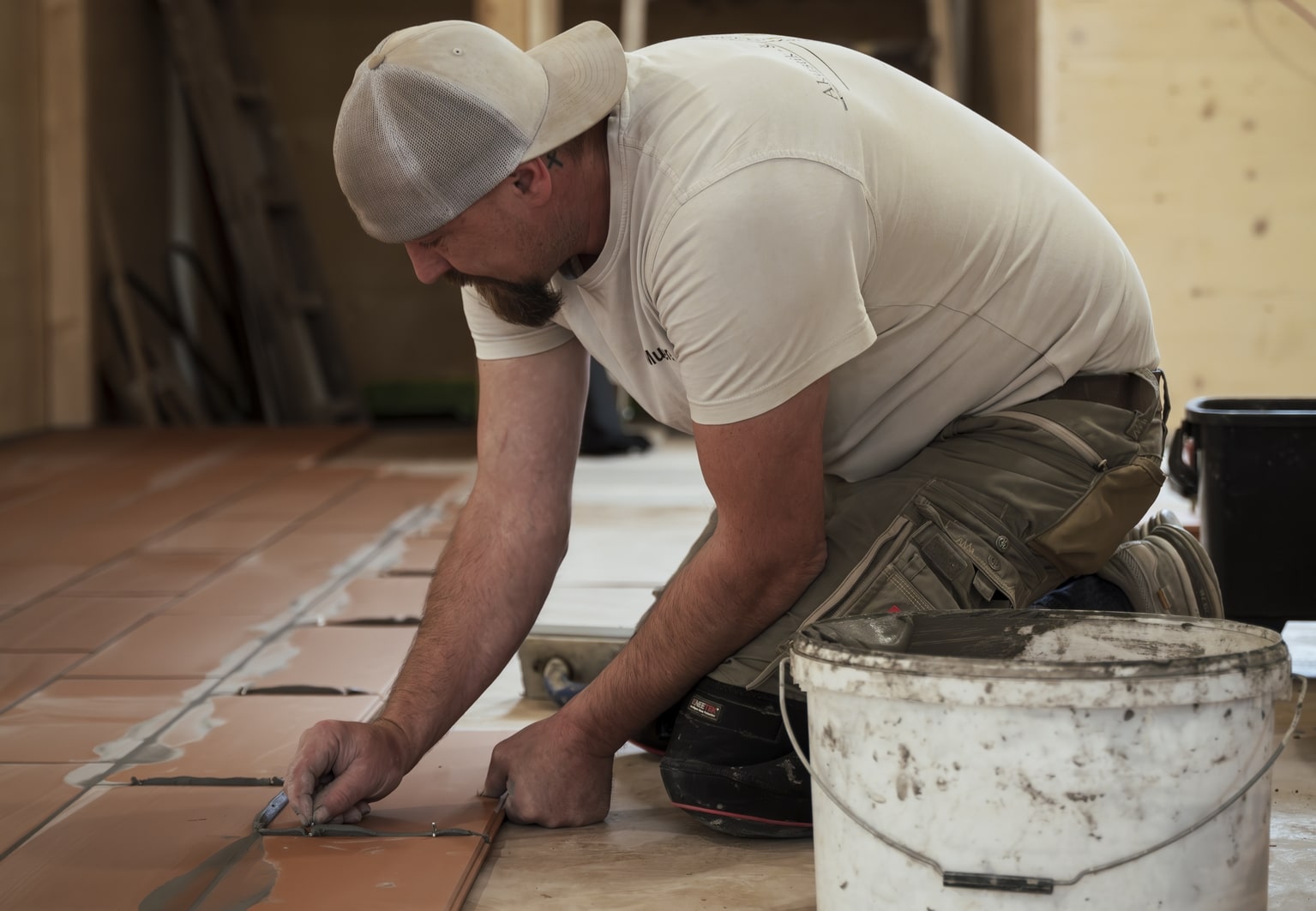
First, a leveling compound or fill is applied to the ceiling. This also serves as an installation level for electrical and data cables as well as water pipes. This is followed by impact sound insulation measuring seven to 30 millimeters. The sheet heating system is then laid. This is followed by a layer of Schrenz paper and finally the screed tile. The clay tiles, which are only 18 millimeters thick, are cut smooth at the ends and have a tongue and groove on the long sides. They are cut to size on site as required and glued together on all four sides during installation. The adhesive is applied to the clay tiles with a trowel. Alternatively, the tiles can also be dipped into the adhesive. By dipping them at an angle with the back of the tile facing upwards, adhesive is not applied to the underside. The first four to five tiles in the first row are then laid with the tongue facing the edge insulation strip and glued at the front, starting in the rear left corner of the room. To prevent the first rows from warping, they are not laid completely flat. The straightness must be checked after the first and every third row using a straight edge or a chalk line. To achieve the necessary half-bond pattern, the second row is started with a prepared half brick. The tongue is pressed into the groove of the previous row of tiles and pushed to the left towards the end joint. After removing the excess adhesive, a joint width of approximately four millimeters is created. Once the four to five tiles of the second row have also been laid, the third row is started again with a whole tile. Only then are the first three rows laid completely. The total height of the floor structure is 55 to 78 millimeters, depending on the height of the leveling layer and the thickness of the impact sound insulation. Installation with a water-based underfloor heating system is also possible.
Durch die reduzierte Materialdicke des Estrichziegels und des Heizpapiers entsteht ein hocheffizientes Heizkonzept für Holzbauten, das für mehr Raumhöhe sorgt und den Bewohnern langfristig ein angenehmes Raumklima und niedrige Energiekosten garantiert. Das Heizsystem verursacht dabei keinerlei Geräusche und ist im Innenraum völlig unsichtbar. Die Steuerung erfolgt über ein programmierbares Thermostat. Auch die Investition in teure Heizkörper, Kessel oder Thermen wird gänzlich überflüssig. Die Wartungs- und Heizkosten werden sich auf ein Minimum belaufen. So profitieren Bauherren von einem wirtschaftlichen und gleichzeitig umweltfreundlichen Heizkonzept, dass hohen Ansprüchen an nachhaltiges Bauen in vollem Maße gerecht wird.